Fryderyk Chopin
Style & Interpretation
On the uniqueness of Chopin's musical language, his style and his piano pedagogy, which still resonates today.
Why we hold Fryderyk Chopin in such high esteem
As the Chopin Society in the Federal Republic of Germany, we see Chopin as far more than just a composer – he is a poet of sound and an ambassador of the human soul.
1.Profound emotion with the greatest clarity
Chopin achieves something rare: his music is deeply emotional without ever seeming sentimental or overwrought. Studies in music psychology show that his works evoke a particularly strong emotional response — above all through subtle dynamic shading and harmonic tension.
2.Redefining the “language” of the piano
He did not simply play the piano — he rethought it. His works use the instrument like a singing voice (“cantabile”), which is today a central ideal of piano playing.
3.Timeless relevance
Whether beginner or virtuoso, Chopin accompanies pianists throughout their lives. His works grow with the player — technically as well as emotionally.
4.Uniting intimacy and mastery
While contemporaries such as Franz Liszt often relied on exaggerated virtuosity for its own sake, for Chopin virtuosity was never an end in itself but always a means of expressing emotion.
What defines the Chopinesque style?
The term “Chopinesque” describes not only composition, but a whole aesthetic of playing:
Rubato – a breathing sense of time
Chopin himself taught that the left hand keeps the tempo while the right hand “speaks” freely. This flexible sense of time is central to his music and has since been analysed scientifically.
Singing tone (cantabile)
The melody should sound like a human voice: deliberate phrasing, natural places to “breathe” and finely differentiated tone colours.
The finest dynamics and tonal nuance
The focus is not on volume but on quality of sound. Micro-dynamics — very fine gradations — are decisive.
Harmonic refinement
Chopin greatly expanded classical harmony: chromatic lines, unexpected modulations and tension created through resolution. These elements later influenced composers such as Claude Debussy.
Technique in the service of expression
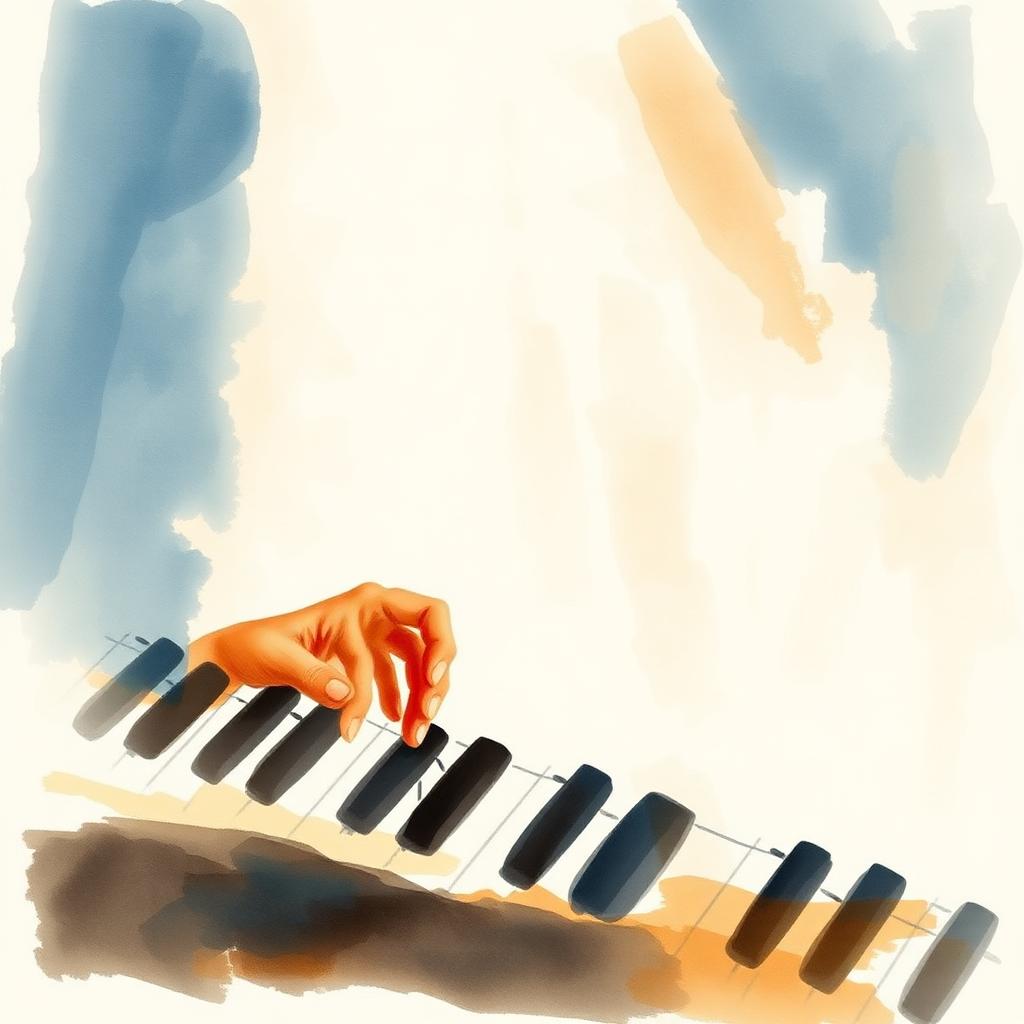
Virtuosity is never an end in itself. Every technical difficulty serves a musical purpose.
Piano pedagogy according to Chopin
Chopin's pedagogy was revolutionary and continues to have an impact today. It is in keeping with modern findings in learning psychology (e.g. motor learning, differentiated practice).
Naturalness before constraint
Chopin rejected rigid systems of technique. The hand should move naturally: no tension, respect for individual anatomy and relaxed finger movement.
Individual guidance
He taught every pupil differently — an approach known today as “differentiated teaching”.
Imagine the sound first
Before you play, you should know how it is meant to sound. This corresponds to modern concepts such as “audiation” (inner hearing).
Etudes as works of art
His etudes are not merely technical exercises but fully fledged musical pieces. They combine targeted technical development with artistic expression.
Slow, mindful practice
Chopin favoured slow practice with control over sound and movement — a method supported by research on error avoidance and neural consolidation.
Learning the Chopin style
The Chopin Society offers piano lessons based on Chopin's own pedagogy – with a focus on tone quality, natural technique and individual guidance.