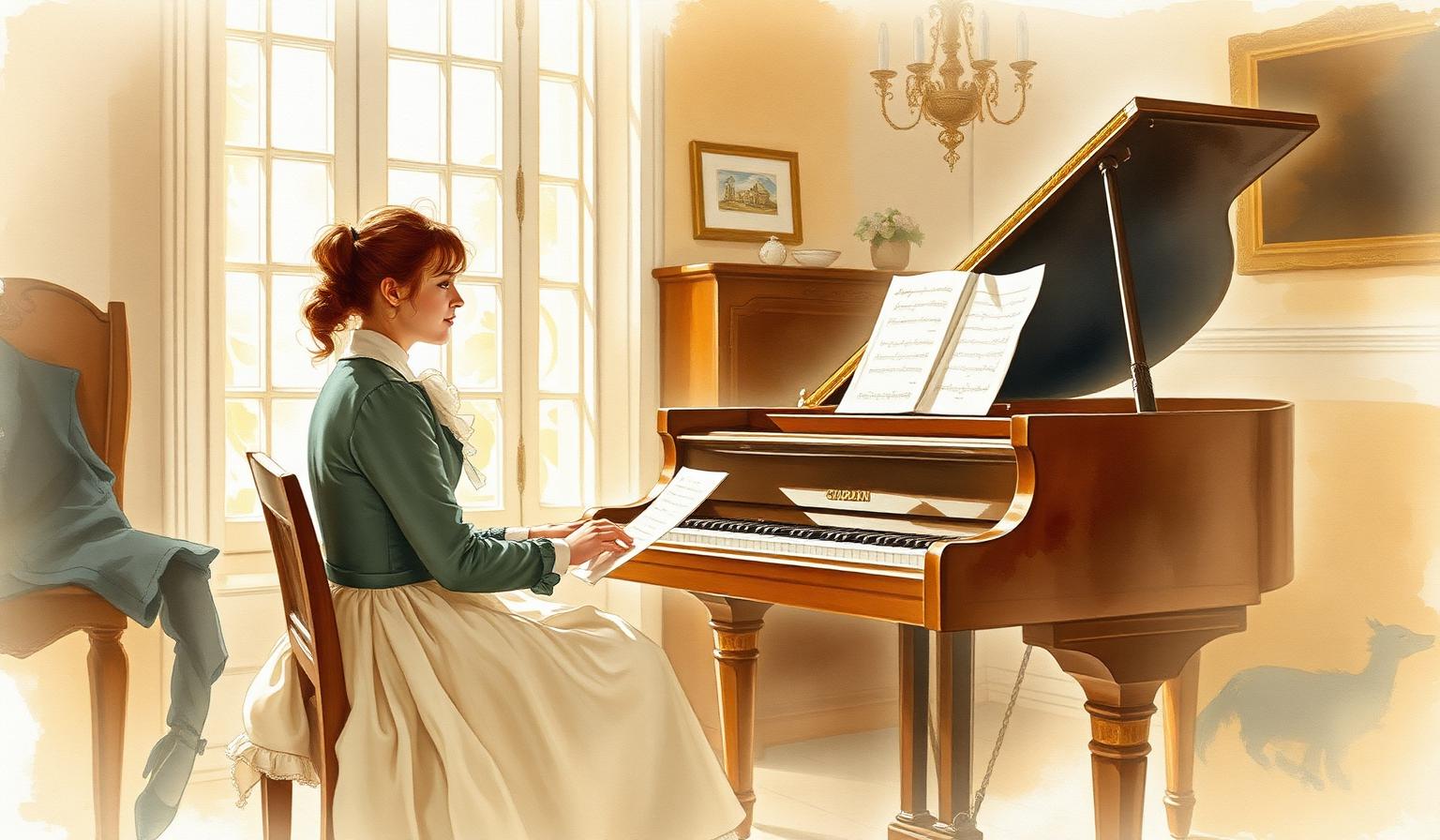
His Life & His Music
Chopin – His Life and His Music
Tone-poet of the Romantic age, ambassador of the human soul.
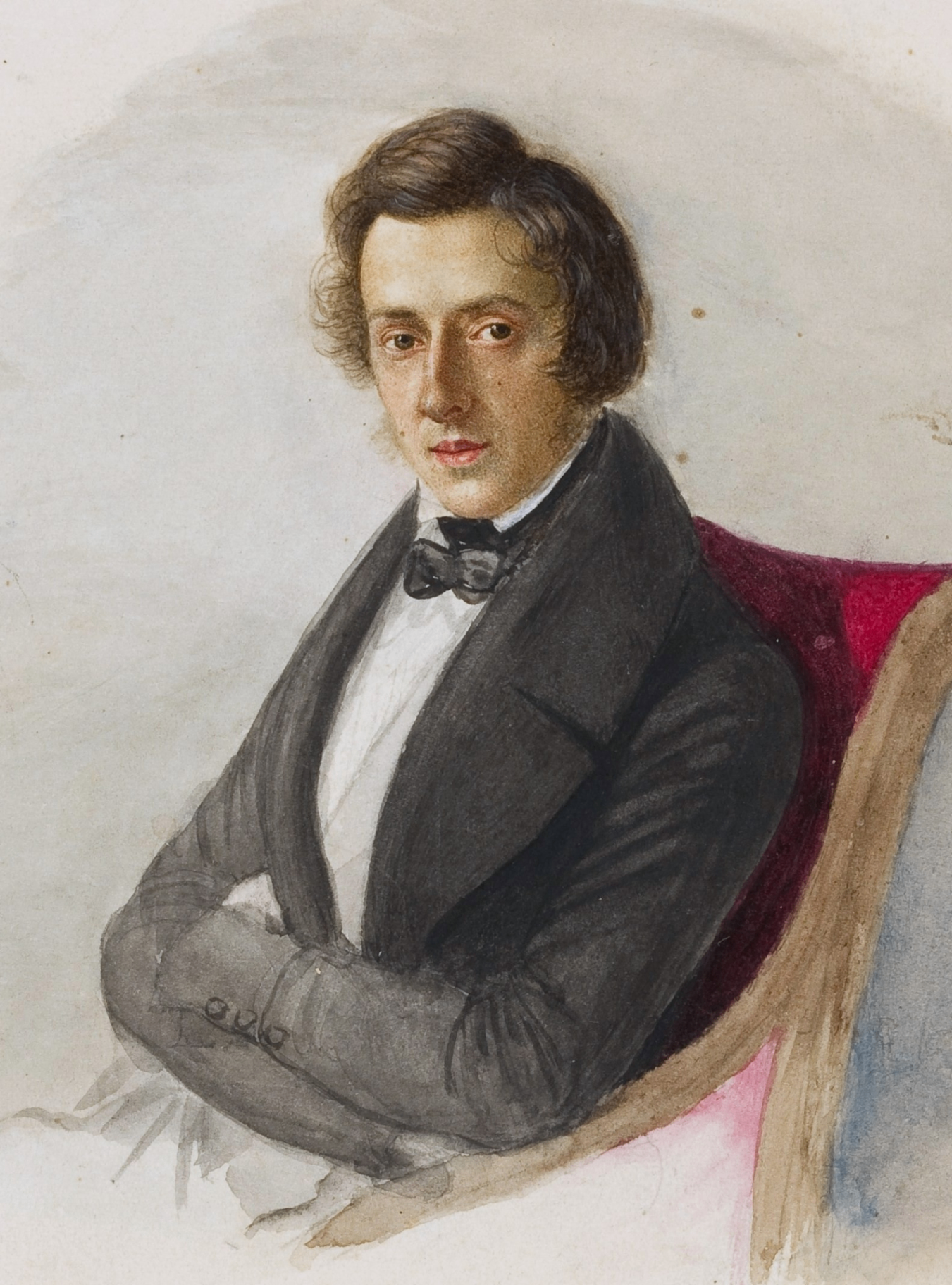
Żelazowa Wola · 1810
Origins and Early Years
Fryderyk Franciszek Chopin was born on 1 March 1810 at Żelazowa Wola, Poland. He was the second of four children of the French émigré Nicolas Chopin and his Polish wife, Justyna Krzyżanowska. From an early age Chopin displayed an extraordinary musical gift, beginning to play the piano at the tender age of five.
He received his first musical instruction from his mother, followed by lessons with Wojciech Żywny, a local teacher who introduced him to the fundamentals of piano playing and music theory.
Until the age of thirteen Chopin was educated at home. He then attended the Lyceum in Warsaw and, at sixteen, entered the Warsaw Conservatory, where he studied composition and piano under Józef Elsner — a thorough grounding that prepared him for his later career.
Alongside music he devoted himself to literature, languages and history — fields that did much to nurture his artistic development and musical sensibility.
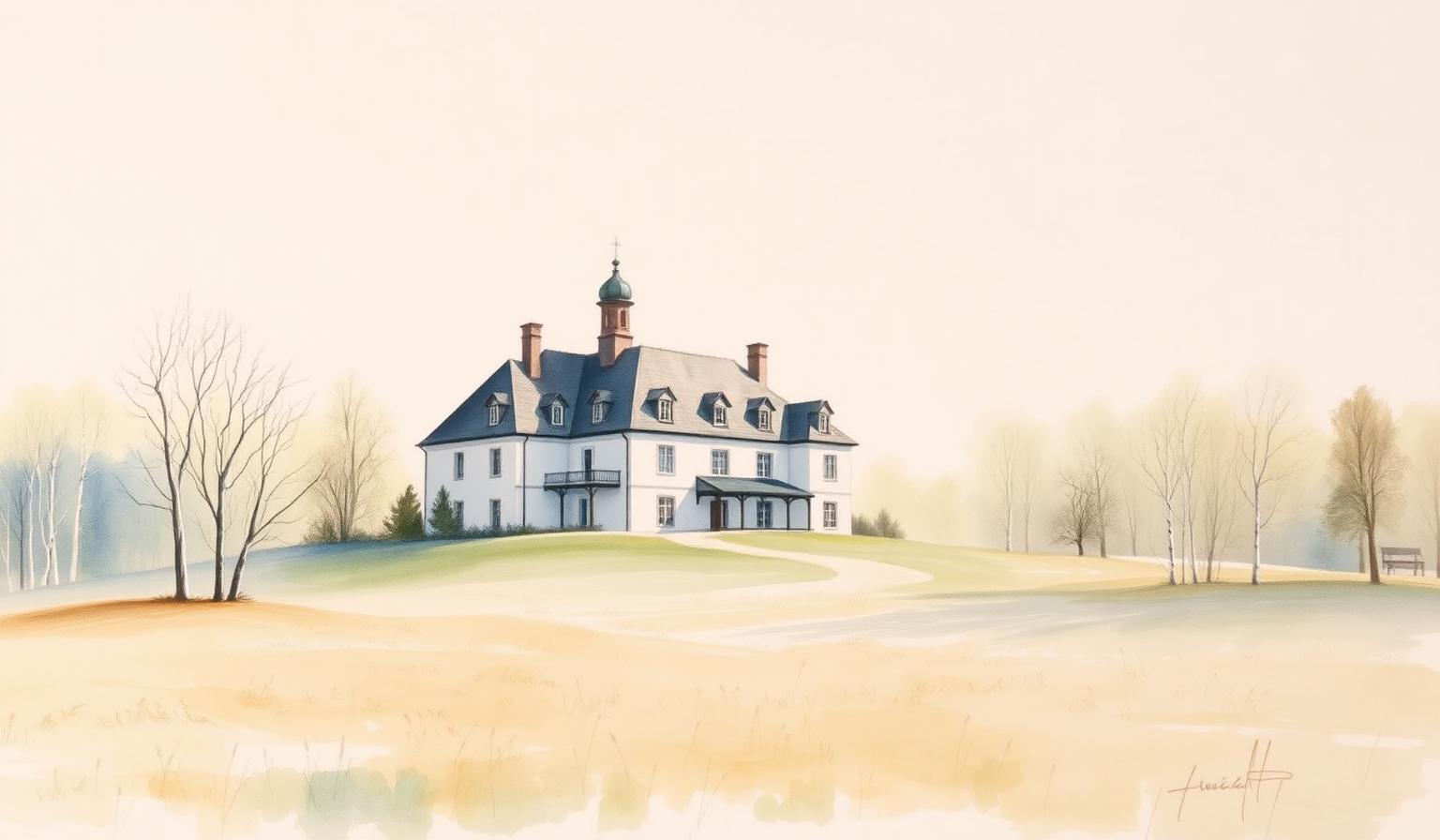
Vienna · Munich · Paris
Setting Out into Europe
At the tender age of twenty, Chopin left his beloved homeland. His first extended stay was in Vienna, where he gave several concerts that helped establish his reputation as a pianist and composer. His longing for Poland suffused his music with a particular emotional depth that still moves us today.
From Vienna he travelled on to Munich and Stuttgart before finally arriving at the pulsing heart of Europe — Paris. There he was swiftly welcomed into the most select circles of the musical elite. In its salons he met Franz Liszt, Hector Berlioz and Eugène Delacroix, whose inspiration and friendship enriched his artistic development.
He was admired for works that represent a unique symbiosis of Polish folklore and Romantic passion. As a proud Polish émigré, Chopin remained deeply attached to his origins — in every note lives the longing for home that accompanied him always.
”In every note and every melody lives the longing for home — an eternal expression of his soul.
1837 – 1847
George Sand and Chopin
George Sand, the pen name of the captivating Amantine Lucile Aurore Dupin, played a profound role in Chopin's life — both personally and artistically. Their passionate and complex relationship lasted ten years, marked by emotional highs and lows and by creative challenges which they shared and mastered together.
Chopin's health had been fragile from the outset; his body and spirit were marked by the dark burden of tuberculosis. In the winter of 1838–39 the two sought refuge together on Majorca, hoping the mild island climate might ease his weakened lungs. Yet the harsh conditions at the Carthusian monastery of Valldemossa, cold and damp, proved anything but healing.
Sand was a celebrated novelist and one of the most fascinating personalities of her age. In her relationship with Chopin she offered him emotional security and a creative refuge. Their life together at her house in Nohant became for Chopin a source of immeasurable inspiration — it was there that some of his greatest works were composed.
Although their love ran deep, their relationship was not free of conflict. Differing outlooks on life and personal difficulties wove a complex pattern of highs and lows that eventually drove them apart.
After the separation, and a final, moving concert in Paris in February 1848, Chopin travelled — at the invitation of his Scottish pupil Jane Stirling — to England and Scotland. Despite devoted care, his health continued to decline. On 17 October 1849 he died in Paris — yet the melodies of his soul remain unforgotten.

A Portrait of His Style
Distinctive Features of Chopin's Music
Chopin's music unfolds an incomparable magic — a unique fusion of enchanting beauty, timeless classical perfection and profound emotional depth. His compositions are like the tenderest of whispers or the most heart-rending cries of the soul, touching listeners' hearts the world over.
His masterly handling of harmony, melody and rhythm is often unconventional and marked by remarkable inventiveness. With a delicate hand he weaves in elements of Polish dance — mazurka, polonaise, krakowiak — creating a fascinating bridge between classical music and Poland's national identity.
His works are a precious jewel in the pianist's repertoire: the highest technical virtuosity paired with the depth of an emotional world that remains an eternal echo of love, of suffering, and of undying beauty.

Innovation
How Did Chopin Revolutionise Piano Playing?
Chopin revolutionised piano playing by developing new techniques that placed the piano firmly centre-stage as a solo instrument. With masterly finger dexterity he created intricate passages and rapid runs, at once melodically and harmonically rich in expression. His études are far more than technical exercises — they are consummate masterworks that expanded the very possibilities of the piano.
In his compositions he experimented with chromatic and modal harmonies. This innovation lent his works a fascinating tonal colour and a greater depth of expression — as though the keys themselves spoke the language of the soul.
Especially in his nocturnes, syncopated melodies in the right hand merge with a steady accompanying rhythm in the left — an appealing contrast that highlights the melody while underscoring a complex harmonic structure.
Characteristic of his playing was rubato: the flexible sense of tempo that heightened the emotional power of his music and gave rise to living, breathing interpretations. His lyrical melodies flow in a delicate legato, often recalling the singing line of bel canto.
”Every note seemed a delicate breath of the soul.
Interpretation
How Did Chopin Play?
Chopin's playing was like a delicate breath of melody and feeling. His masterly control of dynamics and expression lent his interpretations a subtle, almost singing quality — every nuance, every sentiment, was brought vividly to life.
His virtuosity showed itself in the ease with which he mastered intricate runs, rapid arpeggios and demanding chord progressions — with an elegance that made the music seem to flow from him quite naturally. He used the pedal with great sensitivity, colouring the sound as a painter blends his hues.
Perhaps most moving of all was his gift for conveying a profound emotional connection to the music. With extraordinary sensitivity, Chopin brought sorrow, joy and longing vividly to life in performance — the expression of a passionate inner world that touched his listeners' souls unforgettably.
Teacher
Chopin as Teacher
Fryderyk Chopin was far more than an extraordinary composer and pianist; he was a passionate and devoted teacher. Perhaps no other pianist of his stature showed a deeper passion for teaching — his warmth and dedication made every lesson a true expression of his love of art.
His method was rooted in an intimate connection with music, always tailored to the individual needs and character of each pupil. He fostered technical mastery — and, even more, the creativity and personal feeling that music brings to life.
For Chopin, learning was never a mere succession of exercises but a journey into the soul, in which every note and every phrase touches the heart and brings the pupil's individual voice to life.
His pedagogical approach was steeped in empathy, inspiration and a profound understanding of the art of music. The Chopin Society in the Federal Republic of Germany feels committed to this special legacy and honours it through masterclasses, seminars, lectures and individual tuition — living testimony to a tireless dedication to inspiring and nurturing the next generation.